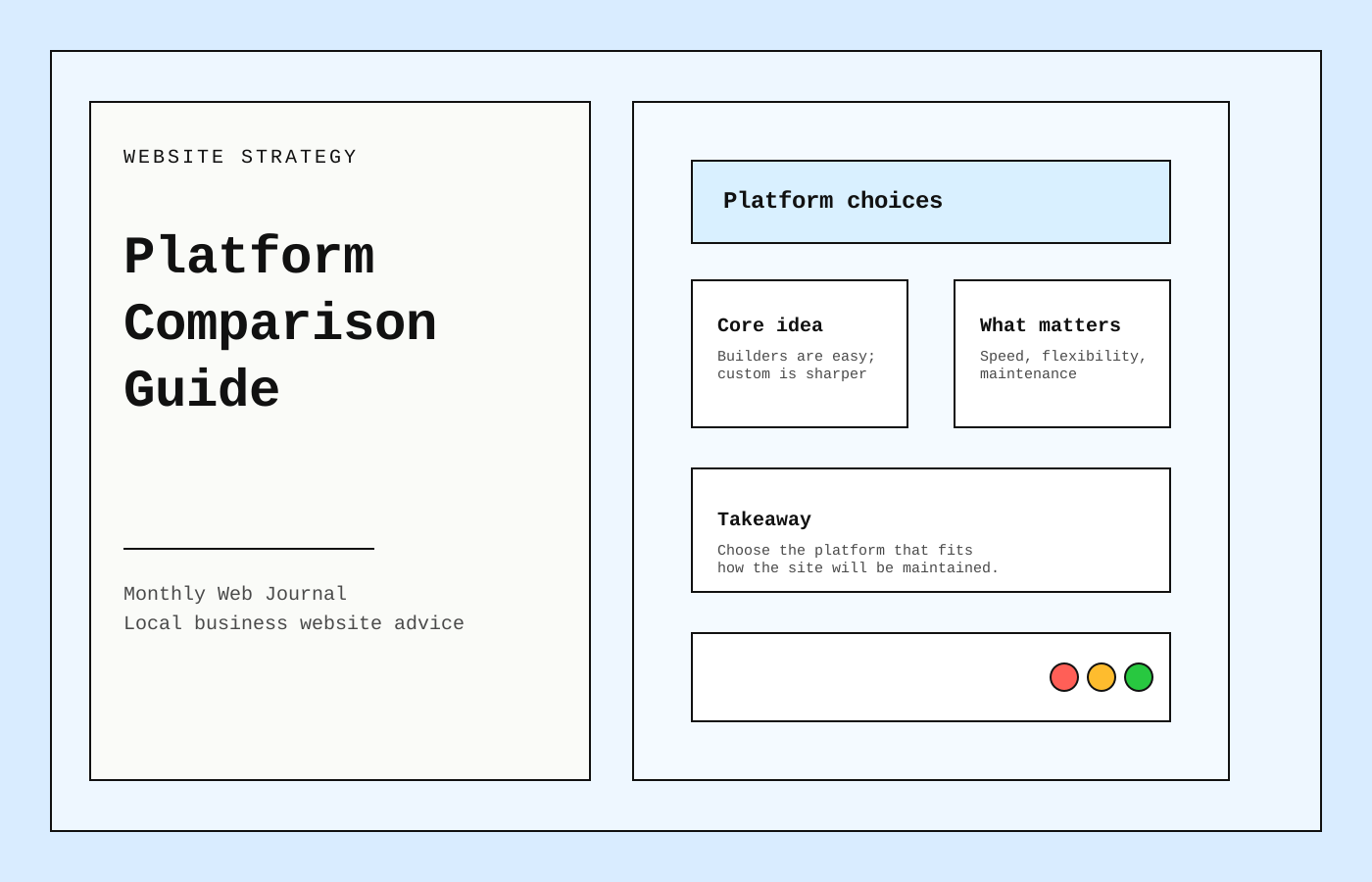
The real question is not which platform is most popular
Small business owners often ask which platform is best, but the better question is which platform fits the way your business actually operates. A solo consultant, a local plumber, and a retail shop do not have the same needs.
The wrong platform usually creates one of two problems. Either it is too limited and you outgrow it quickly, or it is too bloated and becomes slow, fragile, and annoying to maintain.
What WordPress is good at
WordPress is flexible and can be a strong option when you need a large content site, complex publishing workflows, or access to a huge ecosystem of themes and plugins.
The tradeoff is maintenance. Many small business sites on WordPress eventually inherit plugin conflicts, update warnings, security patches, and a backend the owner never wanted to manage in the first place.
Where Wix and Squarespace fit
Wix and Squarespace make it easy to launch quickly, especially for owners who want to do everything themselves. They are convenient, visual, and approachable.
The downside is that they can feel limiting when you want a more distinctive design, stronger performance, or a setup that does not look like a template. They can work well for some businesses, but they are not always the best long-term fit for competitive local markets.
When a custom-built site makes more sense
A custom-built site is usually the best fit when you care about speed, a more original look, cleaner code, and avoiding plugin dependency. That matters for local businesses that want to look more premium than the average builder site.
Custom does not automatically mean complicated. A focused brochure-style site for a local business can be custom built and still be easier to maintain than a plugin-heavy setup.
How to choose the right platform for your business
Use these questions to narrow it down.
- Do you want to update the site yourself, or do you want it handled for you?
- Will the site mostly generate leads, or does it need ecommerce and advanced workflows?
- How important are page speed and a distinct visual identity in your market?
- Who will fix things six months from now when something breaks or needs updating?
Bottom line
There is no universal best platform for every business. The best platform is the one that matches your operational reality, not the one with the loudest marketing.
For many local service businesses, the best choice is the one that combines a fast custom front end with ongoing support, because that removes the technical burden while still giving the site a stronger result than a generic builder.
Common questions
Is WordPress still good for small businesses in 2026?
Yes, for some use cases. But many local businesses do not need WordPress-level complexity and may prefer a faster, simpler setup with less plugin maintenance.
Is Wix or Squarespace better than a custom website?
They are easier to self-manage, but a custom website usually offers better performance, a more distinctive design, and fewer long-term platform limitations.